Home
>>> History of the AGC Dallas History
of the AGC Dallas The Dallas AGC is the local chapter of the Association
of General Contractors (AGC), America's oldest and largest trade association.
The history of AGC Dallas is as told by Raleigh Roussell, prior to his retirement
in the fall of 2012.
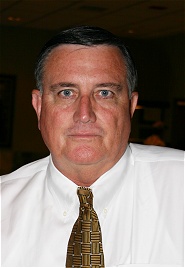 |
| Raleigh
Roussell | The AGC was organized in 1919 to address
problems discovered during World War I. "The original purpose of AGC was
to have a mechanism to mobilize the industry in an emergency situation,"
said Raleigh Roussell, President and CEO of TEXO, the Dallas/Fort Worth chapter
of AGC. "WWI was the first time America was truly called to mobilize on a
global scale and some parts of this mobilization just didn't work well. One of
the areas where this was a big problem was the construction industry. In 1919
President Woodrow Wilson went to the country's leading construction firms and
asked them to create an organization to address this, and AGC was the result."
A full service national trade association with a nationwide network of
exceptional chapters, today's AGC represents nearly 30,000 leading firms in the
industry - including general contractors, specialty contractors and service providers
and suppliers. AGC members play a powerful role in sustaining economic growth,
in addition to producing structures that add to productivity and the nation's
quality of life. AGC is truly the "voice and choice" of the construction
industry. AGC was established in 1918 after a request by President Woodrow
Wilson. Wilson recognized the construction industry's national importance and
desired a partner with which the government could discuss and plan for the advancement
of the nation. AGC has been fulfilling that mission for the last 90 years. Located
in the Metropolitan Washington, DC area, The Associated General Contractors of
America (AGC) is the leading association for the construction industry. Operating
in partnership with its nationwide network of 95 chartered Chapters, AGC provides
a full range of services satisfying the needs and concerns of its members, thereby
improving the quality of construction and protecting the public interest.The AGC
of America supports our local chapter with a staff of approximately 60 personnel. The
Dallas Chapter, the first AGC Chapter in Texas, was formed in 1924; the Fort Worth
Chapter was established one year later. "There was always a need for the
local groups, doing mostly labor-oriented activities," said Roussell. "That's
why there were separate chapters in Dallas, Fort Worth, San Antonio; Houston .
. . each local chapter was initially just an individualized, community group.
Historically, the local organization had a focus on labor issues. The national
organization had a focus on dealing with federal agencies and political issues.
The
1970s Bring Change to Dallas and Fort Worth AGC ChaptersSince its inception
in 1924, Dallas AGC members have been involved with Dallas / Fort Worth's landmark
buildings like
- The new Cowboys Stadium in Arlington
- Reunion
Tower in Dallas
- Bank of America Plaza in Dallas
- Burnett Plaza
in Fort Worth
- American Airlines Center in Dallas
- The Ballpark
in Arlington
- Kimball Museum in Fort Worth
- Texas Motor Speedway
in Fort Worth
- Dallas / Fort Worth International Airport in Irving
The
DFW Airport was particularly noteworthy in that it was the first joint venture
between the Fort Worth and Dallas AGC chapters. "In 1970 the Dallas/Fort
Worth Airport was the first real cooperative project between Dallas and Fort Worth
contractors," said Roussell. "We quickly realized that we were going
to have a difficult time building an airport that was half in Dallas and half
in Tarrant, because there were separate unions in each county. Therefore, we put
together a group called the North Texas Contractors Association (NTCA). Its goal
was to bring the unions into a single regional bargaining process rather than
doing it for each separate county. This way we would have common expiration dates,
wages, working rules and so forth. That worked very well." The creation
of the NTCA carved out a large part of the local AGC chapters' traditional role,
allowing them to pursue new avenues of support for the local construction industry.
In 1971 when the Occupational Safety and Health Administration (OSHA) were
formed, Dallas was the first AGC chapter in the country to hire a safety expert.
"That was sort of a bell cow of services for the industry," said Roussell,
"in terms of helping members manage their safety, do site audits, and do
OSHA representation when OSHA came out. OSHA and our safety program has become
a big part of what we do, and that is become a predominate service provided by
most AGC chapters across the country. It's a big part of a contractor's business." As
environmental matters became more sensitive, the local AGC chapters became involved
with that as well, adding an environmentalist to their staff. "Environmental
Protection Agency (EPA) regulations used to be enforced federally," said
Roussell. "Then they became enforced at a state level, and now they're locally
enforced. All municipalities with over 10,000 residents are now required to administer
EPA regulations on storm water run-off. It used to be one entity interpreting
the regulations one way. Now, in the Metroplex we have 23 cities that are over
10,000 in population so we have 23 different regulators out there. In Arlington
they may look at it one way, then you cross over to Grand Prairie and they look
at it another way. We realized that we needed someone on our staff that not only
knows environmental regulations but is out there building relationships with people
who will be doing the inspections."
Local AGC Chapters Merge into
QUOINUp until the 1980s, the various local chapters in North and East
Texas operated independently; however, economic circumstances and the growing
Metroplex market forced changes over the next several years. In 1988, the
East Texas AGC Chapter merged into the Dallas Chapter because of the soft economy.
This merger expanded the area of responsibility for the Dallas Chapter from the
Dallas/Tarrant County line to the Texas/Louisiana border. Over the next
eleven years, the Dallas and Fort Worth chapters met periodically to consider
the value of combining into one group, with little success. By 2000, however,
the groups' leaders recognized that viewing Dallas and Fort Worth as separate
markets had become an obsolete perspective. "People began to truly realize
that this is one market," said Roussell. "We saw that we could be a
stronger political entity if we put the two chapters together." In
January 2001, QUOIN was formed to create a single AGC chapter that supports more
than 40 counties in North and East Texas. With over 740 members, a professional
staff of 12 and an annual budget of $3.5 million, QUOIN became the leading voice
of the construction industry in this part of the country. Local AGC and
ABC Chapters Merge into TEXOIn 2007, the Chapter Chairman of QUOIN and
the Chapter Chairman of North Texas ABC met informally to discuss the merit of
the two organizations consolidating or merging. This concept had been put to vote
by both organizations in 1995 but it was voted down. Over the course of the next
twelve years, each organization competed for members. Each organization had common
goals: - To increase safety in the work place and train contractors
regarding EPA job site requirements
- Workforce development / education
/ training of all contractor member personnel
- Developing the next
generation of Contractor Leaders
- Influencing legislative issues
- Social
and networking events
Economic issues existed that suggested each
organization should consider a change in going forward in the industry and in
the geographic area, each organization served. Many contractor members were paying
dues to both organization and spending money to send personnel to events for both
organizations. Agreement was reached to explore the consolidation / merger. It
took nearly two years of committee meetings established by the Executive Committee
for the AGC and ABC Chapters, combined Board of Director meetings. An outside
consultant/facilitator was hired to help negotiations with both Board of Director
groups to take the merger/consolidation to a total member vote. Town Hall Meetings
were conducted with Members from both organizations. Two teleconferences with
the Arizona Chapter of AGC and ABC were conducted. The Arizona Chapters
were the first Chapters in the US to merge the two State AGC and ABC organizations.
The purpose was to determine what worked for them, what did not work and what
they would do differently. This was done in an effort to be successful when we
went to membership for a vote. Ultimately, the Board of Directors of each organization
agreed to take the merger concept and plan to full member vote. Ballots from every
Contractor voting member were sent to an outside accounting firm for tabulation
and the vote passed. In 2009, the consolidated / merger organization operated
with an Executive Committee comprised of the members of each Chapters Executive
Committee. The same was true for the make-up of the Board of Directors. The combined
Executive Committee and combined Board of Directors put in place the framework
for future Executive Committee's and Board of Directors.
Where
Did the Name TEXO Come From?Inevitably, the questions came up: "Where
did the name 'TEXO' come from? TEXO is a Latin term which means to weave, twine
together, construct and build. As to how the name TEXO was chosen, "We
hired a professional PR firm to come up with a name. As the PR representative
was getting ready to meet with the new combined chapter Executive Committees I
told him, 'The National Chapters of AGC and ABC are not going to allow their name
to be used together in our Chapter name. The combined chapter members are not
going to go for any off-the-wall names. You better be thinking of terms like Council,
Associated, Master Builder, Constructors or words like that.' He showed me a number
of alternatives for a new name and other ideas for the name were suggested by
the Executive Committees of AGC and ABC. In the final analysis, as a group we
felt the TEXO name was symbolic for the two associations." "When
we did this consolidation / merger we had contractors in Dallas, Fort Worth and
East Texas," said Roussell. "Normally, the chapters are described geographically.
We thought it was unfair to call it the North Texas Chapter of AGC and ABC because
then you think only of Dallas and Fort Worth. After coming together as one, our
new Chapter for AGC and ABC extends to the Louisiana border to the east and to
the west past Weatherford and Mineral Wells. To the north, we extend to the Oklahoma
border. To the south, we go just north of Waco. We certainly did not want to say
North and East Texas because that just doesn't roll off the tongue the right way."
Finally, the combined Board of the North Texas Chapters of AGC and ABC
agreed TEXO was an appropriate name for two very well known Construction Associations
who have competed for contractor members since the 1970's. The new organization
felt TEXO was short and unique when they saw logos and understood the symbolism
agreement was reached. Both Associations were successful individually but
all agreed one organization with one voice would accomplish more than two competing
organizations in the future.
NEXT:
The Modern Dallas AGC AGC
Member Bob Moore Construction recognizes that the AGC Dallas's name was changed
to TEXO The Construction Association in 2009. This
followed the merger of the North Texas Chapters of AGC and ABC. While initially
the name TEXO was not widely recognized with other construction and commercial
real estate businesses, it has since become well known and regarded. The merger
of AGC and ABC in Dallas will continue to offer benefits to the industry and has
already been instrumental in key legislative changes that have made a positive
impact for General Contractors as well as Specialty Contractors all over the state
of Texas. The purpose of this website is to provide historical information
about the Dallas AGC and to help make the new consolidated organization's information
easier for you to find. For more information about TEXO
The Construction Association Chapters of AGC / ABC, we encourage to you
to visit their website at:
|
|
|
|